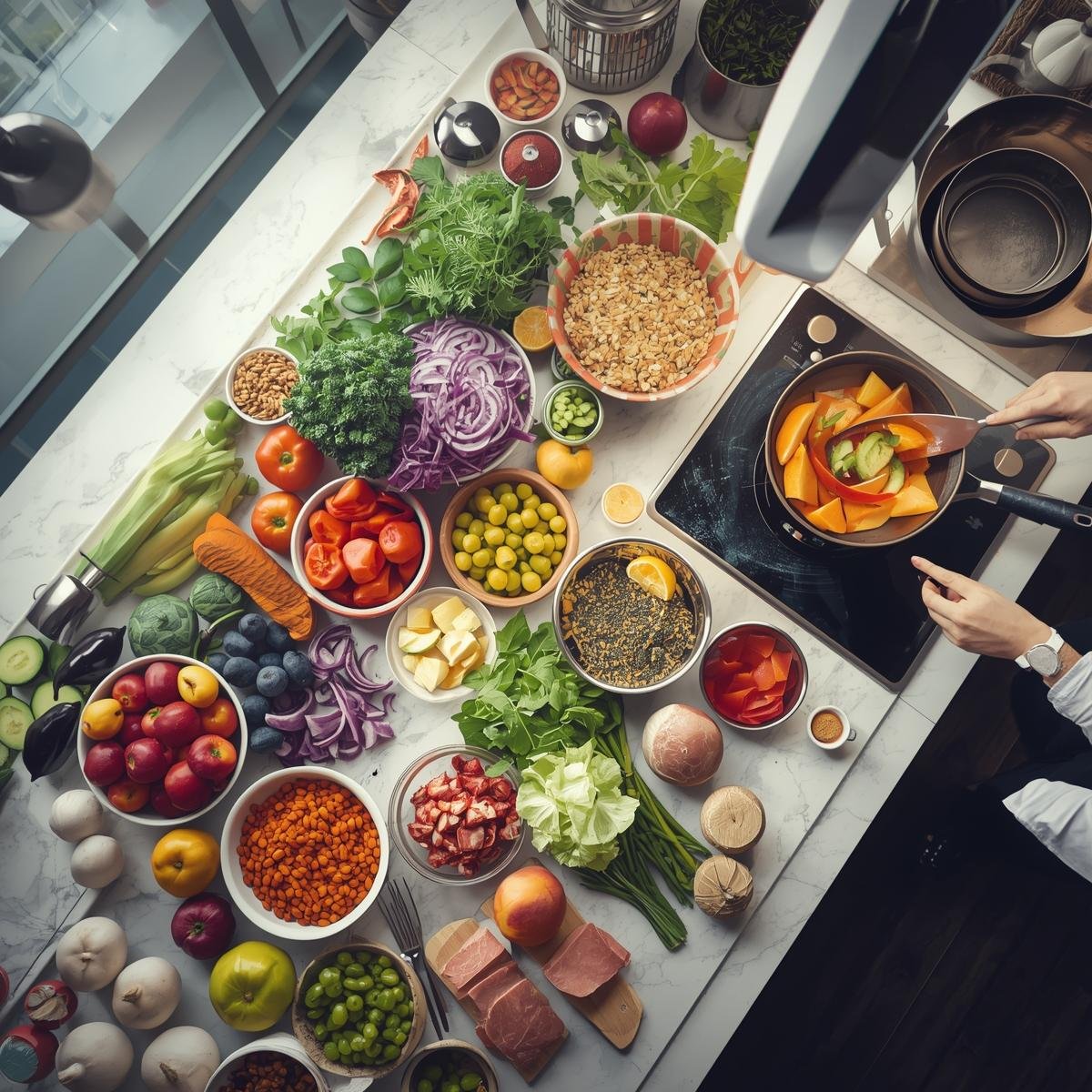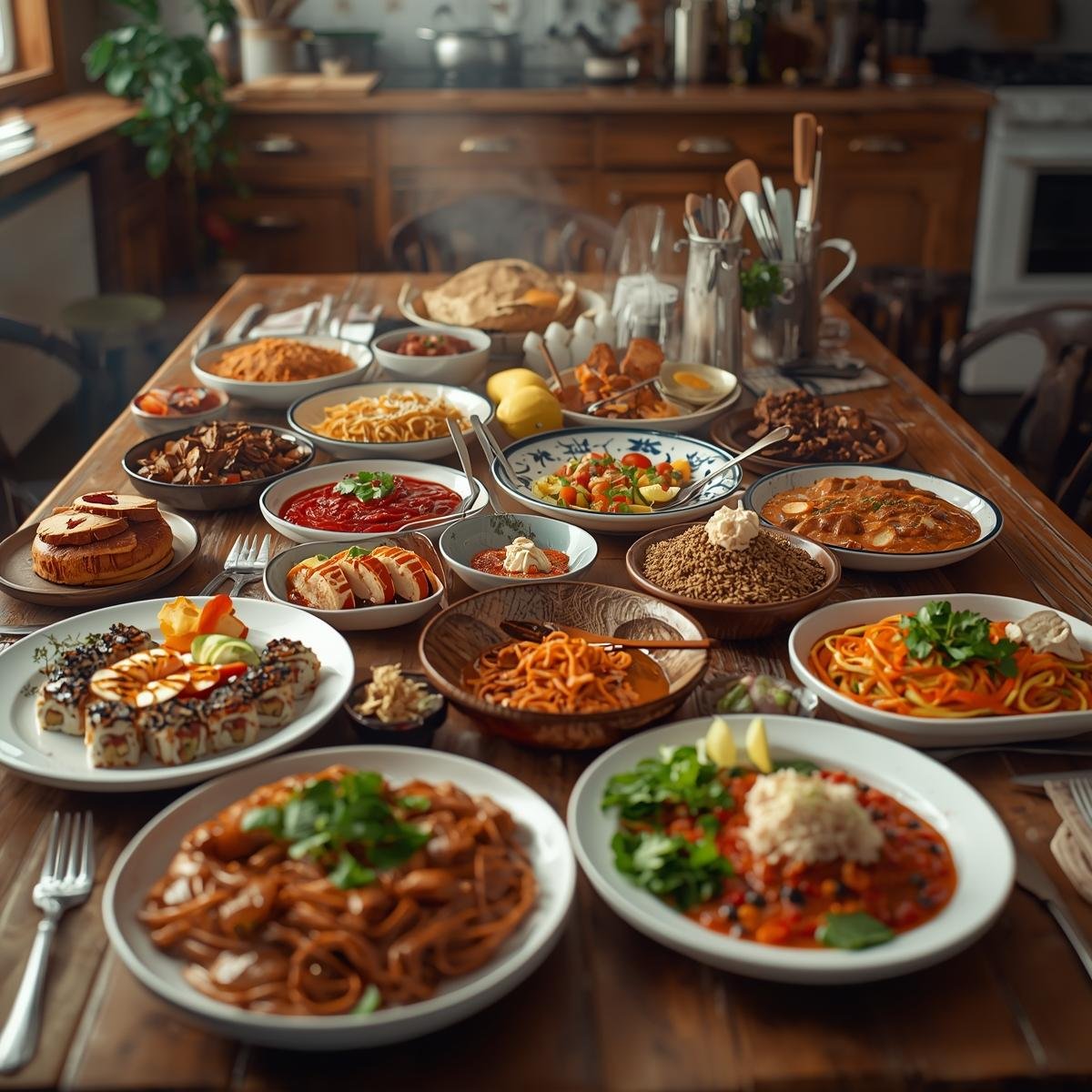
Trying international cuisine at home is a way to enjoy new flavors without traveling. Cooking dishes from different cultures broadens culinary skills, introduces unique ingredients, and makes meals more interesting.
This guide explains how to explore global cuisines from your own kitchen.
Why Cook International Cuisine at Home
Cooking international dishes offers several benefits:
- Discover new flavors and textures
- Learn about different cultures
- Save money compared to dining out
- Customize ingredients and portions
- Improve cooking skills
Even simple recipes provide a satisfying culinary experience.
1. Start With Familiar Ingredients
Begin with dishes that use ingredients you can easily find.
Examples:
- Italian pasta dishes using tomato, garlic, and olive oil
- Mexican tacos with beans, cheese, and tortillas
- Indian curry using commonly available spices
Familiar ingredients reduce complexity and cost.
2. Explore Popular Global Cuisines
Consider cuisines that are beginner-friendly:
- Italian: pasta, risotto, pizza
- Mexican: tacos, quesadillas, enchiladas
- Chinese: stir-fries, fried rice, dumplings
- Indian: simple curries, lentil dishes, flatbreads
- Mediterranean: salads, roasted vegetables, seafood
These cuisines often use basic techniques and widely available ingredients.
3. Follow Authentic Recipes
Use reliable sources for authentic flavor:
- Cookbooks from the cuisine’s region
- Reputable food blogs or cooking websites
- Video tutorials for step-by-step guidance
Authentic recipes teach correct spice combinations, cooking methods, and presentation.
4. Learn Basic Techniques
Many international dishes share common techniques:
- Stir-frying and sautéing
- Boiling and steaming
- Roasting and baking
- Marinating and seasoning
Mastering basic techniques makes it easier to attempt multiple dishes.
5. Incorporate Spices and Herbs
Spices define international dishes:
- Italian: basil, oregano, thyme
- Indian: cumin, coriander, turmeric
- Mexican: chili powder, paprika, cilantro
- Middle Eastern: cinnamon, sumac, mint
Experiment gradually to find the right balance for your taste.
6. Prepare Ingredients Ahead of Time
Mise en place (prepping ingredients before cooking) saves time and reduces mistakes.
- Chop vegetables
- Measure spices
- Marinate proteins
- Pre-cook grains if needed
Organized preparation ensures smoother cooking.
7. Adjust Recipes to Your Taste
International recipes can be adapted:
- Substitute hard-to-find ingredients
- Reduce heat or spice levels
- Replace allergens with alternatives
Adaptation allows dishes to be enjoyable while retaining their essence.
8. Pair Dishes With Appropriate Sides
Traditional sides enhance meals:
- Italian pasta with a side salad or bread
- Indian curry with rice or naan
- Mexican tacos with salsa or guacamole
Complements improve flavor and balance the meal.
9. Experiment With Presentation
Presentation enhances the dining experience:
- Arrange ingredients neatly
- Garnish with herbs
- Use attractive serving dishes
Visual appeal makes meals more satisfying.
10. Keep Trying and Learning
Exploring international cuisine is a gradual process.
- Try one dish per week
- Note what worked and what can improve
- Gradually attempt more complex recipes
Consistency builds confidence and culinary knowledge.
Common Mistakes to Avoid
- Overcomplicating recipes with too many ingredients
- Using incorrect cooking methods
- Adding spices all at once without tasting
- Skipping preparation steps
- Ignoring freshness of ingredients
Avoiding these mistakes ensures better results.
Final Thoughts
Cooking international cuisine at home brings variety, flavor, and cultural insight to everyday meals. Starting simple, following authentic recipes, and gradually expanding your repertoire makes the process enjoyable and achievable.
Exploration in the kitchen is a skill that grows over time and makes mealtime more engaging and delicious.