Smart Home Devices That Can Make Daily Life Easier
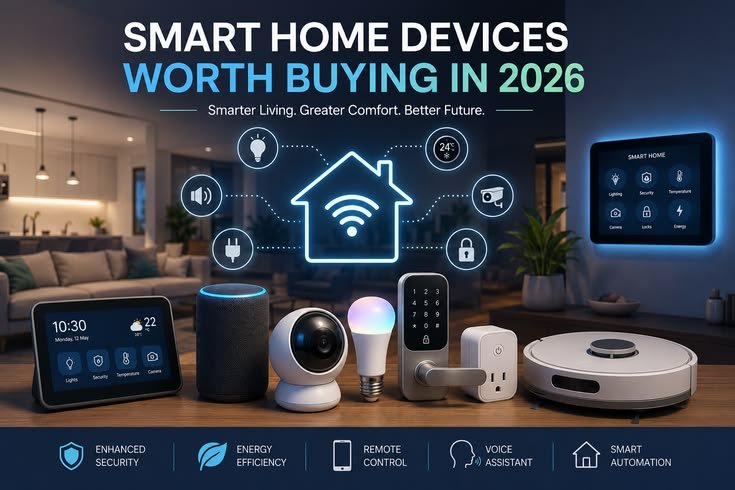
Smart home technology has changed the way people manage everyday tasks. Devices that once seemed like expensive or complicated technology are now available in many price ranges and can be used in apartments, houses, offices, and small living spaces. Smart home devices can help control lights, manage temperature, improve security, organize routines, and reduce the amount of manual work required around the home.
The main benefit of a smart home is convenience. Instead of walking around the house to control different devices, many functions can be managed through a smartphone, voice command, automation, or scheduled routine. Some devices can also work together, allowing one action to trigger several others.
You do not need to turn your entire home into a connected system at once. Starting with a few useful devices can provide practical benefits while keeping costs manageable. Here are some of the smart home devices that can make daily life easier.
1. Smart Bulbs
Smart bulbs are among the simplest smart home devices to install. They can replace standard light bulbs and connect to a smartphone app or compatible smart home platform.
With a smart bulb, users can turn lights on or off remotely, create schedules, adjust brightness, and in some models change the color or color temperature.
For example, you can schedule bedroom lights to turn on shortly before you wake up. You can also set outdoor or living room lights to turn on in the evening.
Smart bulbs can be useful when you forget to switch off a light before leaving home. Instead of returning to the house, you may be able to turn it off through your phone.
2. Smart Plugs
A smart plug can turn an ordinary electrical device into a remotely controlled device. It connects between a wall outlet and an appliance.
Smart plugs can be useful for lamps, fans, chargers, coffee makers, and other compatible appliances. Through an app, users can often switch the connected device on or off and create schedules.
For example, a lamp connected to a smart plug can automatically turn on in the evening and switch off at bedtime.
Smart plugs are also useful for reducing unnecessary standby operation. A device that does not need to remain powered continuously can be scheduled to turn off during certain hours.
However, users should check the electrical rating of a smart plug before connecting high-power appliances.
3. Smart Speakers
Smart speakers combine audio functions with voice control. They can answer questions, play music, set timers, create reminders, and control compatible smart home devices.
When connected with smart lights, plugs, thermostats, or other devices, a smart speaker can become a central control point.
Instead of opening an app, you can use a voice command to perform a supported action. This can be particularly convenient when your hands are occupied while cooking, cleaning, or working.
Smart speakers can also help with daily routines. You can use them to create alarms, reminders, shopping lists, and timers.
4. Smart Thermostats
Smart thermostats are designed to provide more control over heating and cooling systems. Depending on the model and the home’s HVAC system, they may allow temperature adjustments through an app, schedule changes, and automated temperature management.
One of the main advantages is scheduling. Instead of manually adjusting the thermostat throughout the day, you can create a routine based on your daily schedule.
For example, the temperature can be adjusted when people leave for work or school and changed again before they return home.
Some smart thermostats can also learn patterns or use sensors to improve temperature management. Compatibility should always be checked before purchasing because not every thermostat works with every heating and cooling system.
5. Smart Doorbells
Smart doorbells add connected features to the front entrance of a home. Many models include a camera, microphone, speaker, motion detection, and smartphone notifications.
When someone approaches the door, the device may send an alert to your phone. Depending on the model and settings, you may be able to see the visitor and communicate through the doorbell.
This can be useful when you are away from home or unable to reach the door immediately.
A smart doorbell can also provide useful information about activity around the entrance. However, users should review privacy settings, storage options, and local laws before installing a camera-based device.
6. Smart Security Cameras
Smart security cameras can monitor selected areas inside or outside a property. Many cameras provide live video through a smartphone application.
Some models include motion detection and notifications. Others offer features such as night vision, two-way audio, activity zones, and cloud or local storage.
The best placement depends on the purpose of the camera. Outdoor cameras may be useful around entrances, driveways, or other areas that need monitoring. Indoor cameras can be used in common areas when appropriate.
Security cameras should be installed with privacy in mind. Avoid positioning cameras toward private spaces where recording would be inappropriate.
7. Smart Locks
Smart locks can provide another way to control access to a home. Depending on the model, they may support smartphone control, PIN codes, temporary access codes, or other authentication methods.
One useful feature is temporary access. For example, a homeowner may provide a temporary code to a trusted visitor instead of giving them a physical key.
Some smart locks can also notify users about locking and unlocking activity.
Before purchasing a smart lock, it is important to check whether it is compatible with the existing door and lock configuration. Battery life and emergency access options should also be considered.
8. Robot Vacuum Cleaners
Robot vacuum cleaners can automate part of the cleaning process. Many models can move around a home, detect obstacles, and return to a charging station automatically.
More advanced models may create maps of rooms and allow users to select specific areas for cleaning.
The major advantage is time. Instead of manually vacuuming every day, a robot vacuum can handle routine cleaning while you focus on other tasks.
Robot vacuums are not suitable for every situation, and their performance can depend on flooring, furniture, cables, rugs, and other obstacles. Keeping the floor reasonably clear can help the device work more effectively.
9. Smart Sensors
Smart sensors are small devices that can detect changes in the home environment. Different sensors can detect motion, doors opening or closing, temperature, humidity, water leaks, or other conditions.
A door sensor, for example, can notify you when a door is opened. A water leak sensor can provide an alert when moisture is detected in an area where a leak could cause damage.
Sensors become more useful when combined with automation. A motion sensor could trigger a light, while a door sensor could trigger a notification.
These small devices can therefore provide practical benefits without requiring a large smart home installation.
10. Smart Smoke and Carbon Monoxide Detectors
Safety devices are an important part of a connected home. Smart smoke and carbon monoxide detectors can provide alerts when dangerous conditions are detected.
Some connected models can send notifications to a smartphone, allowing homeowners to receive alerts even when they are away.
Traditional smoke and carbon monoxide detectors remain important, and smart features should not be treated as a replacement for proper safety practices.
When installing these devices, follow the manufacturer’s instructions and local safety recommendations. Batteries should also be checked and replaced according to the manufacturer’s guidance.
11. Smart Air Purifiers
Smart air purifiers can monitor certain indoor air conditions and automatically adjust their operation on supported models.
Some devices can be controlled through a mobile app, while others may connect to broader smart home systems.
These features can make routine operation easier. For example, an air purifier may be scheduled to operate during selected hours or adjusted remotely.
When choosing an air purifier, pay attention to room size, filter availability, maintenance requirements, and operating costs rather than focusing only on smart features.
12. Smart Kitchen Appliances
Connected kitchen appliances are becoming more common. Depending on the product, smart features may include remote monitoring, scheduling, notifications, or integration with other devices.
Smart appliances can help users keep track of cooking tasks and create more organized routines.
However, safety should always come first. Remote operation should only be used when supported by the manufacturer and appropriate for the specific appliance.
How Smart Home Devices Work Together
The real advantage of a smart home often comes from automation rather than individual devices.
For example, a simple evening routine could turn on selected lights, adjust the thermostat, and activate another compatible device at a scheduled time.
A morning routine could switch on bedroom lighting, provide a weather update through a smart speaker, and adjust the temperature.
These automated routines reduce repetitive actions. Instead of controlling every device separately, users can create routines that perform several tasks together.
Compatibility is important when building these systems. Before buying multiple devices, check whether they work with the same smart home platform or support the communication standards required by your setup.
Benefits of Smart Home Devices
Smart home technology can provide several practical benefits.
Convenience
The ability to control devices from one application or through voice commands can make everyday tasks easier.
Automation
Schedules and routines can reduce repetitive manual tasks. Lights, thermostats, and other devices can operate according to predefined conditions.
Remote Control
Many connected devices allow users to monitor or control them when away from home, depending on the device and internet connection.
Home Monitoring
Cameras, doorbells, locks, and sensors can provide additional information about activity around a property.
Energy Management
Smart lighting, thermostats, and plugs can help users monitor and manage when devices operate. Actual savings depend on how the devices are used and the efficiency of the equipment.
Things to Consider Before Buying Smart Home Devices
Smart home devices can be useful, but purchasing should be based on actual needs rather than features alone.
First, check compatibility. A device that does not work with your existing platform may require another application or additional hardware.
Second, consider security. Use strong passwords, enable available security features, keep device software updated, and secure your home Wi-Fi network.
Third, check ongoing costs. Some devices may require subscription services for certain features such as cloud storage.
Fourth, think about maintenance. Batteries need replacement, filters need cleaning or changing, and software may require updates.
Finally, consider whether the device solves a real problem. A smart device is most useful when it saves time, improves organization, provides useful information, or adds a practical safety feature.
Final Thoughts
Smart home devices can make everyday life easier by reducing repetitive tasks and providing more control over household systems. Smart bulbs, plugs, speakers, thermostats, security cameras, doorbells, locks, sensors, and robot vacuums are among the devices that can provide practical benefits.
You do not need to purchase everything at once. A better approach is to identify the tasks that take the most time or require frequent attention and choose devices that address those needs.
Start with simple products such as smart bulbs or plugs, then gradually add sensors, security devices, cleaning equipment, or climate controls as needed.
A well-designed smart home is not about having the largest number of connected devices. It is about using technology where it provides a clear benefit. With the right combination of devices, automation, and security practices, smart home technology can become a useful part of everyday life.