The Future of Virtual Reality and Augmented Reality Technology
Introduction
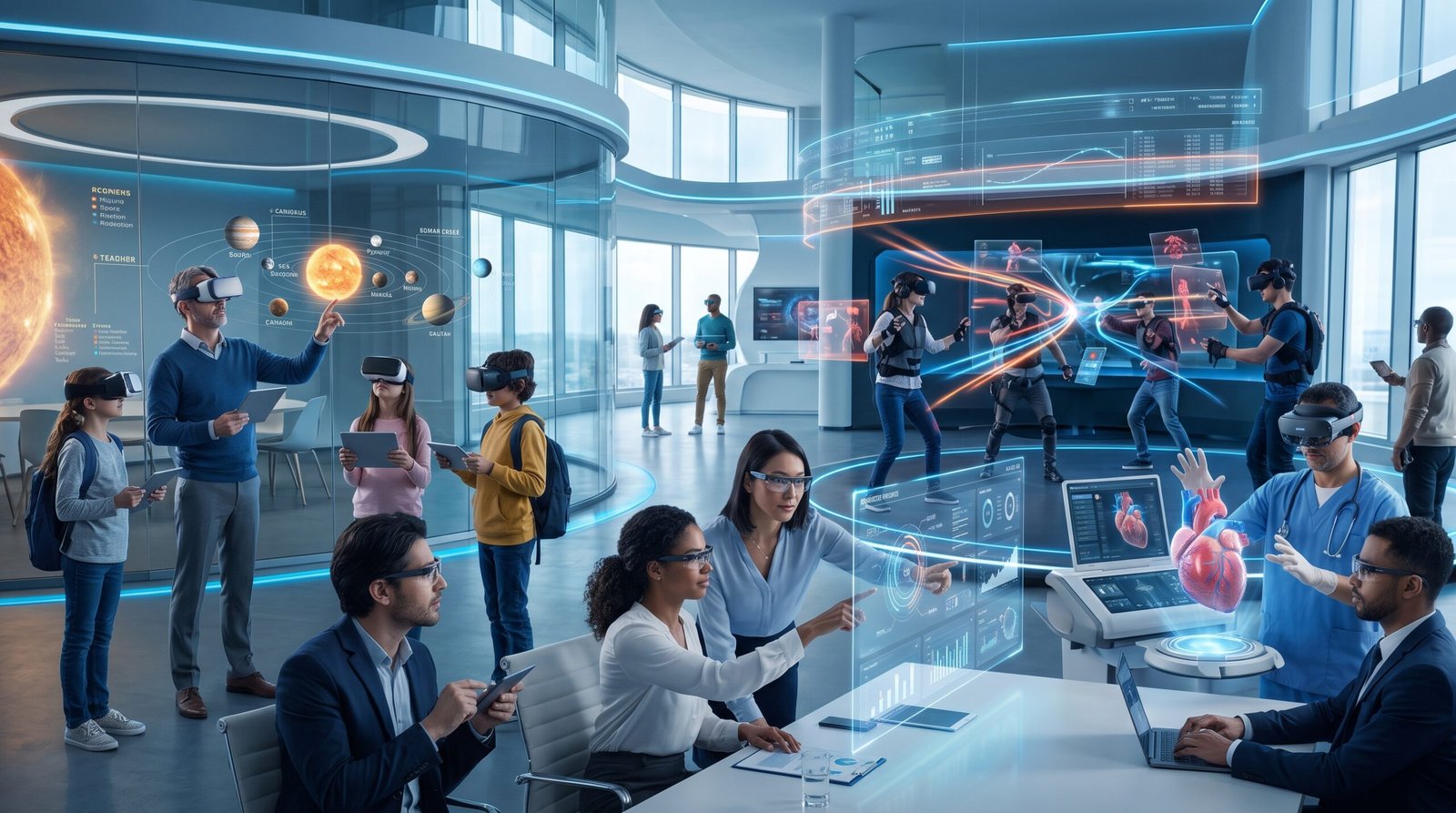
Virtual Reality (VR) and Augmented Reality (AR) technologies have transformed the way people interact with digital information. Once primarily associated with gaming and entertainment, these technologies now influence education, healthcare, business, manufacturing, retail, transportation, and communication. As computing power, internet connectivity, and digital infrastructure continue to improve, VR and AR technologies are becoming increasingly integrated into everyday life and business operations.
Virtual Reality creates fully immersive digital environments, while Augmented Reality overlays digital information onto the physical world. Both technologies offer opportunities to improve training, collaboration, customer experiences, and operational efficiency.
The future of Virtual Reality and Augmented Reality technology is expected to influence numerous industries, creating new methods of communication, learning, entertainment, and business management.
What Is Virtual Reality?
Virtual Reality is a technology that creates computer-generated environments that users can explore and interact with using specialized devices.
VR systems typically include:
- VR headsets
- Motion sensors
- Controllers
- Tracking systems
- Audio systems
Users experience digital environments that simulate real-world or fictional settings.
Common applications include:
- Gaming
- Training simulations
- Education
- Healthcare
- Virtual meetings
- Industrial operations
Virtual Reality focuses on complete immersion within digital environments.
What Is Augmented Reality?
Augmented Reality is a technology that overlays digital information onto the real-world environment.
AR systems display:
- Images
- Text
- Animations
- Data visualizations
- Interactive objects
Devices used for AR include:
- Smartphones
- Tablets
- Smart glasses
- Head-mounted displays
Unlike VR, Augmented Reality combines digital content with physical surroundings.
Difference Between VR and AR
Although both technologies involve digital experiences, they operate differently.
| Feature | Virtual Reality | Augmented Reality |
|---|---|---|
| Environment | Fully digital | Physical world with digital overlays |
| User Experience | Immersive | Interactive enhancement |
| Equipment | VR headsets | Smartphones, tablets, AR glasses |
| Real World Visibility | Blocked | Visible |
| Applications | Simulations, gaming | Navigation, training, retail |
Understanding these differences helps organizations choose appropriate solutions.
Evolution of VR and AR Technology
The development of VR and AR technologies has occurred over several decades.
Early Research
Researchers explored computer-generated environments and digital interaction systems.
Commercial Development
Technology companies introduced consumer VR and AR products.
Mobile Technology Integration
Smartphones increased access to AR applications.
Enterprise Adoption
Businesses implemented VR and AR for training, operations, and customer services.
Artificial Intelligence Integration
AI technologies improved immersive experiences and automation.
This evolution continues to expand technological capabilities.
Why VR and AR Matter
Virtual and augmented reality technologies provide several benefits.
Improved Learning
Interactive experiences support education and training.
Increased Productivity
Businesses automate processes and improve workflows.
Better Communication
Immersive technologies create new forms of interaction.
Enhanced Customer Experiences
Organizations deliver engaging services and products.
Operational Efficiency
Industries improve performance through simulations and data visualization.
These benefits drive increasing adoption.
VR and AR in Education
Education remains one of the fastest-growing applications of immersive technologies.
Virtual Classrooms
Students participate in digital learning environments.
Benefits include:
- Remote accessibility
- Interactive learning
- Educational simulations
Practical Training
VR supports training in:
- Medicine
- Engineering
- Science
- Aviation
Augmented Learning Materials
AR applications display:
- Interactive diagrams
- Historical reconstructions
- Scientific models
Educational institutions increasingly adopt immersive technologies.
VR and AR in Healthcare
Healthcare organizations use VR and AR for numerous applications.
Medical Training
Medical professionals practice procedures using simulations.
Benefits include:
- Reduced training risks
- Increased experience
- Improved education
Surgical Assistance
AR systems provide surgeons with visual information during procedures.
Mental Health Treatment
Virtual environments support therapies involving:
- Anxiety management
- Stress reduction
- Rehabilitation
Patient Education
Immersive experiences help patients understand treatments and conditions.
Healthcare applications continue expanding.
VR and AR in Manufacturing
Manufacturing industries use immersive technologies to improve operations.
Applications include:
Equipment Training
Workers practice operating machinery safely.
Product Design
Engineers visualize products before production.
Maintenance Support
AR systems display repair instructions.
Production Monitoring
Managers observe manufacturing processes using digital tools.
These technologies improve efficiency and reduce operational errors.
VR and AR in Retail
Retail businesses increasingly adopt immersive experiences.
Virtual Shopping
Customers explore digital stores remotely.
Product Visualization
Consumers preview products before purchasing.
Examples include:
- Furniture placement
- Clothing visualization
- Home decoration planning
Customer Engagement
Interactive experiences improve customer satisfaction.
Retail applications continue developing rapidly.
VR and AR in Real Estate
Real estate companies use immersive technologies to improve property marketing.
Applications include:
- Virtual property tours
- Architectural visualization
- Interior design previews
- Property development planning
Benefits include:
- Increased accessibility
- Reduced travel requirements
- Better customer experiences
VR and AR in Gaming
Gaming remains one of the largest markets for immersive technologies.
Advantages include:
- Interactive experiences
- Physical engagement
- Social interaction
- Immersive environments
Technological improvements continue expanding gaming possibilities.
VR and AR in Business Collaboration
Organizations increasingly use immersive technologies for communication.
Applications include:
Virtual Meetings
Employees interact within digital environments.
Remote Collaboration
Teams work together regardless of location.
Product Demonstrations
Businesses showcase products using immersive experiences.
Corporate Training
Organizations conduct employee training programs.
These applications support global business operations.
VR and AR in Military and Defense
Defense organizations use immersive technologies for:
- Training simulations
- Mission planning
- Equipment operation
- Tactical analysis
Benefits include:
- Reduced training costs
- Improved preparation
- Enhanced safety
Military applications continue advancing.
VR and AR in Transportation
Transportation industries adopt immersive technologies for:
- Driver training
- Navigation systems
- Vehicle design
- Maintenance procedures
These applications support operational efficiency and safety.
VR and AR in Tourism
Tourism organizations use immersive technologies to create digital experiences.
Examples include:
- Virtual destination tours
- Historical site reconstructions
- Travel planning tools
- Interactive cultural experiences
These technologies enhance tourism experiences.
VR and AR in Entertainment
Entertainment industries use immersive technologies for:
- Interactive experiences
- Digital performances
- Live events
- Media production
- Sports broadcasting
Consumer demand continues driving innovation.
The Role of Artificial Intelligence in VR and AR
Artificial intelligence improves immersive technologies through:
- Object recognition
- Speech processing
- Behavioral analysis
- Automated interactions
- Personalized experiences
The integration of AI increases system capabilities.
The Role of 5G Networks
5G technology supports VR and AR through:
- Faster communication speeds
- Reduced latency
- Increased connectivity
- Improved streaming performance
Advanced communication networks will support future growth.
The Development of AR Glasses
Many companies continue developing wearable AR devices.
Potential applications include:
- Navigation
- Communication
- Workplace productivity
- Education
- Healthcare
AR glasses may become common consumer devices.
The Rise of the Metaverse
The concept of the metaverse involves interconnected digital environments where users interact, work, learn, and socialize.
Potential applications include:
- Business collaboration
- Digital commerce
- Education
- Entertainment
- Social networking
VR and AR technologies play important roles in metaverse development.
Challenges Facing VR and AR
Despite significant progress, challenges remain.
Hardware Costs
Equipment can be expensive.
Technical Limitations
Some systems require substantial computing resources.
User Comfort
Extended use may cause discomfort.
Content Development
Creating immersive experiences requires specialized skills.
Privacy Concerns
Data collection creates security and privacy considerations.
Infrastructure Requirements
Reliable networks and computing systems remain necessary.
Addressing these challenges will influence future adoption.
Economic Impact of VR and AR
Immersive technologies contribute to economic growth through:
- Technology investments
- Employment creation
- Product development
- Service innovation
- Industry transformation
The economic impact of these technologies continues expanding globally.
Future Trends in Virtual and Augmented Reality
Several trends will shape future development.
Artificial Intelligence Integration
AI will improve personalization and automation.
Wearable Technology Expansion
Smaller and lighter devices will increase adoption.
Business Applications
Organizations will expand enterprise use cases.
Healthcare Innovation
Medical applications will continue growing.
Educational Transformation
Immersive learning environments will become more common.
Smart City Integration
Urban environments may incorporate AR technologies.
These trends will influence the future of digital interaction.
Will VR and AR Become Mainstream?
Many experts believe that VR and AR technologies will become increasingly integrated into daily life.
Factors supporting adoption include:
- Improved hardware
- Reduced costs
- Faster internet networks
- Increased business investment
- Consumer demand
- Technological advancements
Although widespread adoption may require time, immersive technologies continue progressing toward broader acceptance.
Conclusion
Virtual Reality and Augmented Reality technologies are transforming how individuals, businesses, and governments interact with digital information. Their applications extend far beyond entertainment into education, healthcare, manufacturing, retail, transportation, communication, and many other industries.
As artificial intelligence, cloud computing, and communication networks continue to evolve, VR and AR technologies will likely become more accessible, efficient, and integrated into everyday life. Despite existing challenges, these technologies represent an important component of future digital transformation.
Understanding the future of Virtual Reality and Augmented Reality provides valuable insight into how immersive technologies will continue shaping industries, economies, and human interaction.
Frequently Asked Questions
What is Virtual Reality?
Virtual Reality is a technology that creates immersive digital environments using specialized equipment.
What is Augmented Reality?
Augmented Reality overlays digital information onto the physical world.
What industries use VR and AR?
Healthcare, education, manufacturing, retail, entertainment, transportation, and many other industries use immersive technologies.
How does artificial intelligence support VR and AR?
Artificial intelligence improves automation, personalization, object recognition, and user interactions.
What role will 5G play in VR and AR?
5G networks provide faster speeds and lower latency for immersive experiences.
Are VR and AR technologies expensive?
Costs vary depending on equipment and applications, but prices continue to change as technology develops.
What is the future of VR and AR?
Future developments include increased business adoption, wearable devices, artificial intelligence integration, and expanded immersive experiences.